
Spiders lay eggs. Depending on species, they can lay thousands of eggs or just one single egg as is the case with the tiny spiders in the genus Monoblemma (found in tropical Africa and tropical Americas). The featured image above shows the egg sac of Argiope aurantia (AKA banana spider, garden spider, Steelers spider) on the left and a wolf spider (Rabidosa punctulata) egg sac on the right.
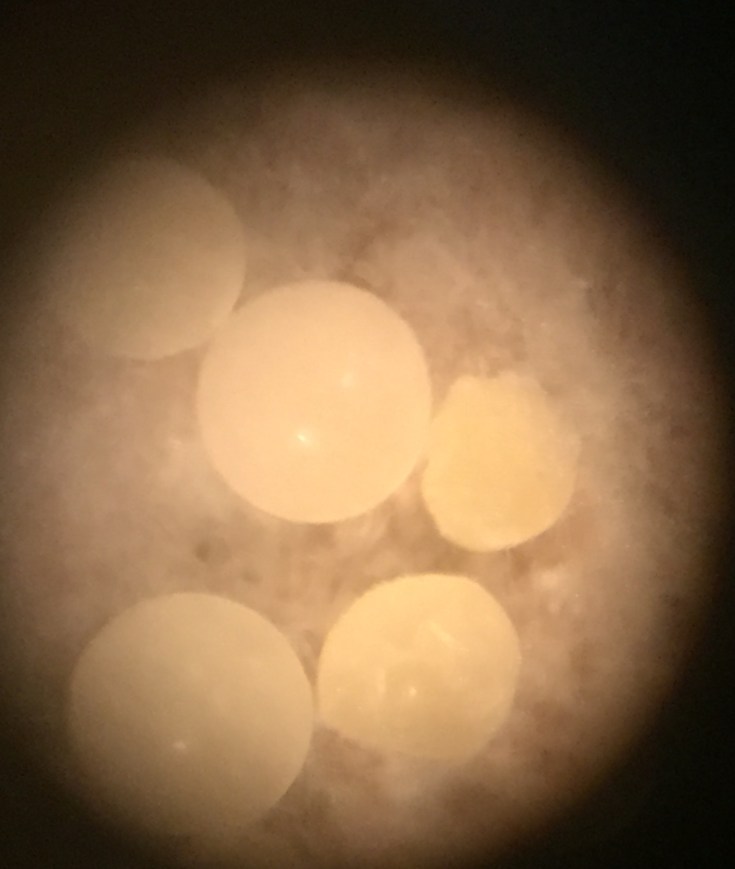
The female spider produces a mat of silk, the eggs are deposited on the mat, and the whole thing is wrapped up to look like a sac. Some sacs are paper discs. Some look like fluffy balls, some look like debris, and some are merely held together by a few threads. Egg sacs may be abandoned or protected while the eggs are developing. Wolf spiders and fishing spiders carry the egg sac around with them. Some spiders make a silken tent and hole up with the eggs until they hatch. Spiders can produce several eggs sacs per season. Spider egg sacs are nearly as diverse as the spiders themselves!
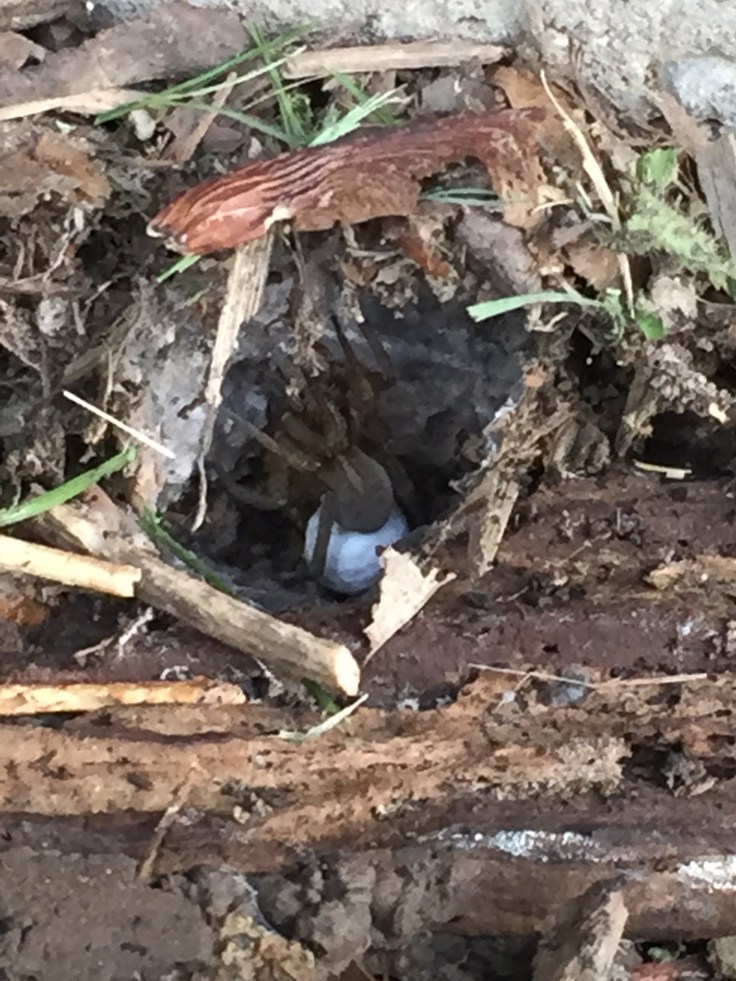
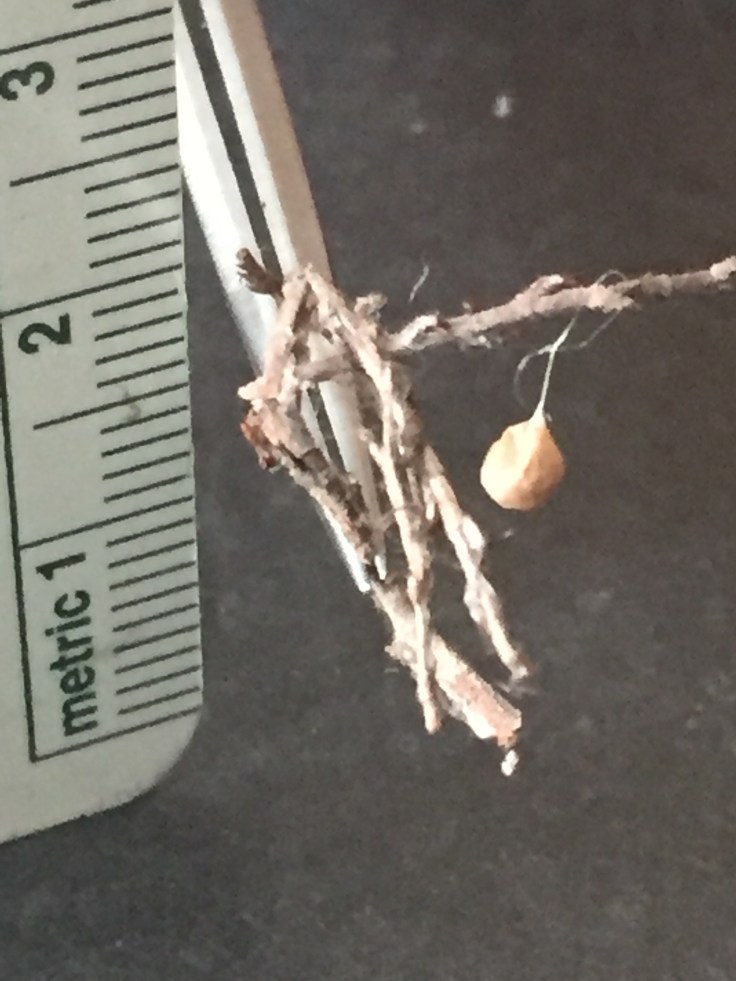

While hiking at McConnell’s Mill State Park, I came across “cave spiders” that I never saw before. The cave was between some big boulders with camel crickets all over the place as well. Perhaps camel crickets were the main menu item for these spiders. I took a bunch of pictures and was later able to identify the spiders as Meta ovalis, the cave orbweaver, using an egg sac as confirmation.

Some spider egg sacs that you may already be familiar with are woven by our common house spiders. Teardrop-shaped, papery, brown sacs, about the size of a pinky nail, belong to Parasteatoda tepidariorum. These spiders are common in porch corners and garages. Then there’s my roomies, Steatoda triangulosa AKA The Vacuum Evaders which create perfect, cottony spheres.
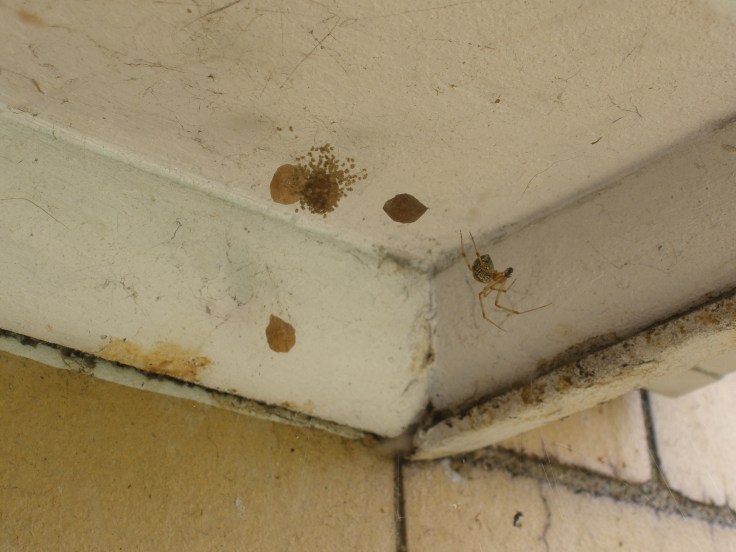
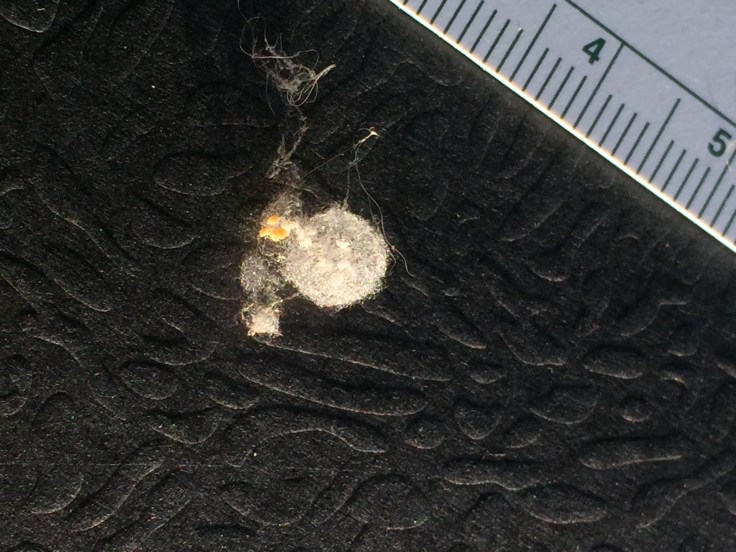

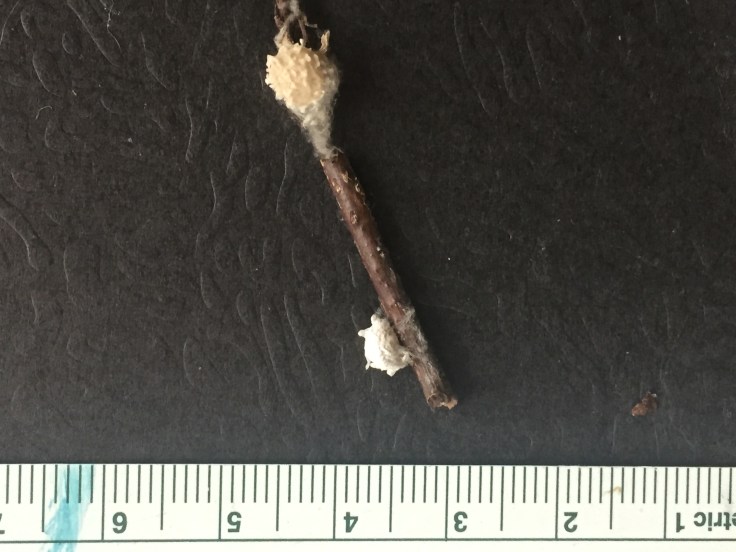
Spiders are dioecious which means there are male and female. Check out The Birds and the Boxing Gloves? for more info on how to tell them apart. Even though there are male and female, there have been cases of female spiders giving birth to all female spiders, no males needed (parthenogenesis). Spiders may also lay a bunch off infertile eggs that just never hatch. This has happened with my captive immature female spiders who have been isolated from males. Suddenly, an egg sac appears. I’ve opened these egg sacs just to find the eggs hard and clumped together like a stone.

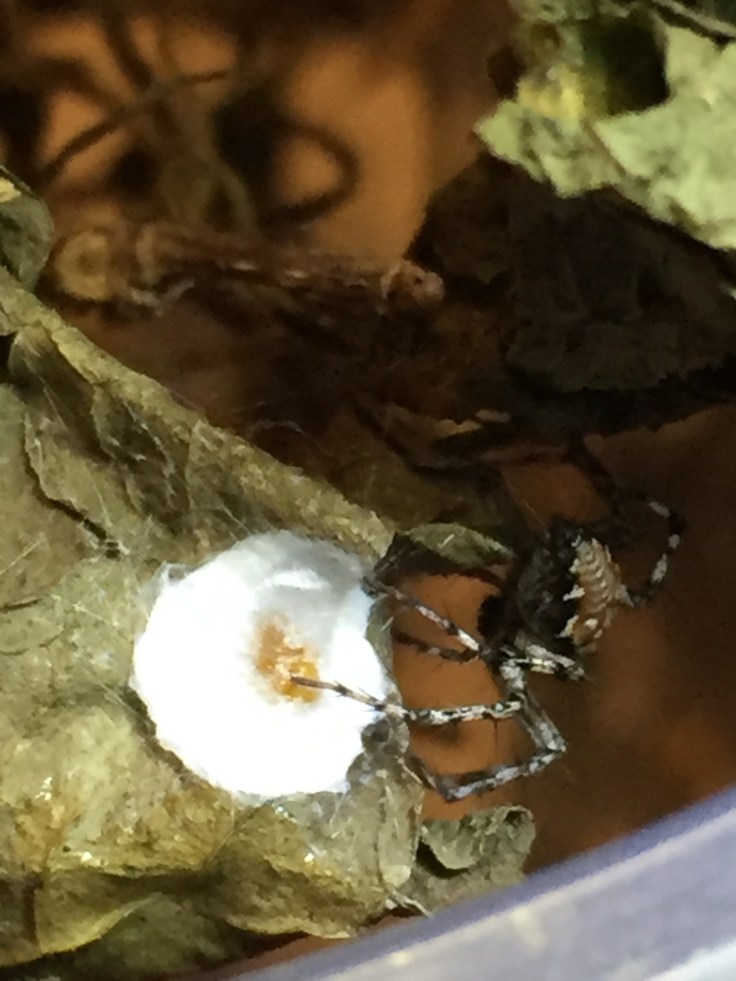
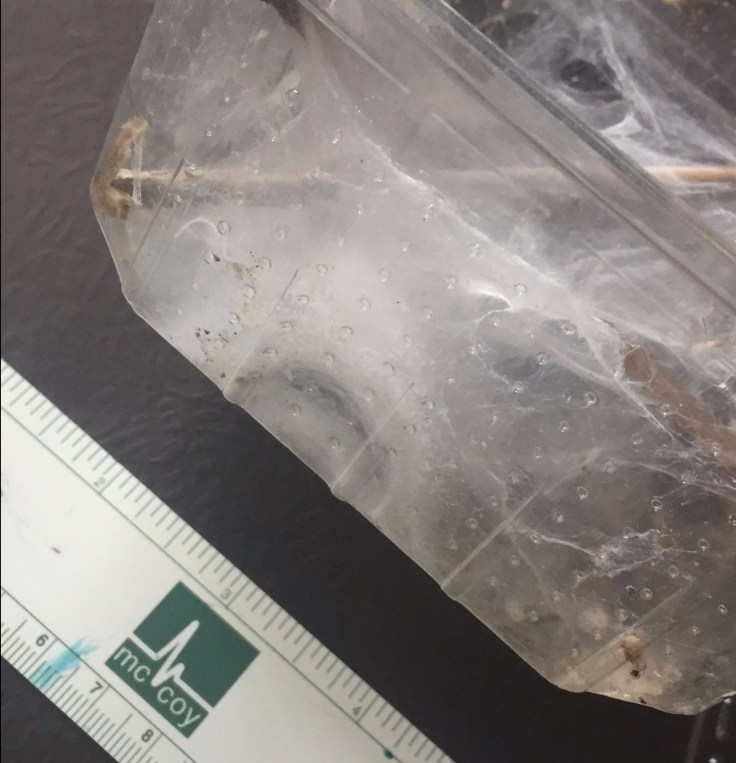
Once the spiderlings hatch, they stay inside the safety of the egg sac for their first molt and then bite their way through the silky mesh. Wolf spider mom’s tear open the sac for the spiderlings and they quickly climb onto her back. As of this writing, I have the large, yellow egg sac of the orb weaver Neoscona crucifera. The spiderlings have hatched, but are still in the sac. I can see them moving around when I put a light underneath the container. It’s a cold January here in Pittsburgh, most all spiderlings would naturally come out in spring. Since they’re in the heated indoors, I’m guessing they’ll come out sooner. We’ll cross that bridge when we get there!
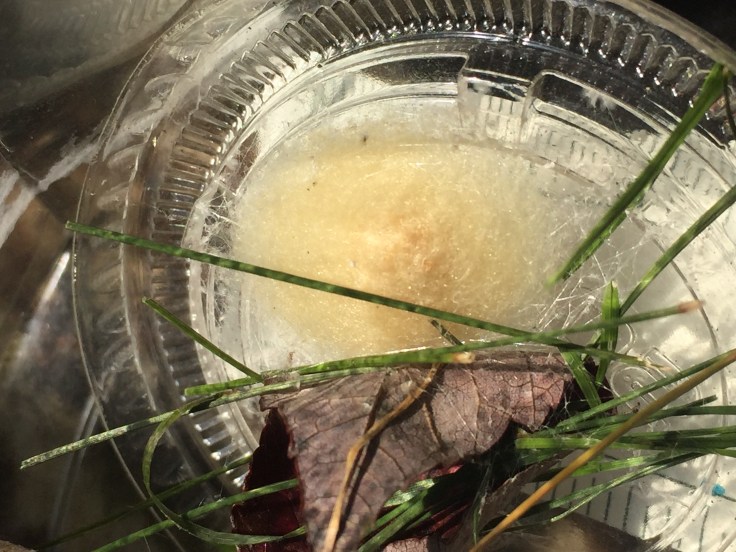
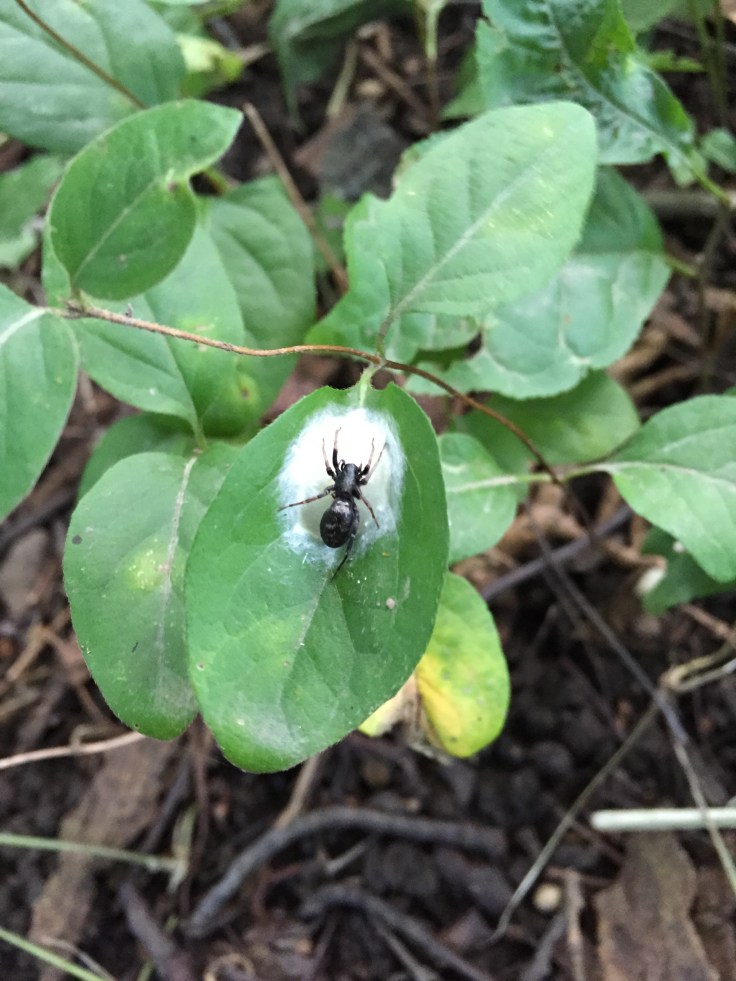
I have just touched briefly on the diversity of spider egg sacs. There are many more like the vase-shaped bolas spider sac and the brown widow’s spiked sphere which resembles the ball on the end of a flail. Brown recluse egg sacs stand out under black light and the pirate spider’s sac is bright orange. It’s like gift wrapped spiders! Check out Egg Sac Gallery 2 for these and more!
Check out this video of a black widow laying eggs
And just for fun, here’s a link for spider egg donuts


I’m watching a house spider that has made three egg sacs over a period of a couple of weeks.
The first sac has spiderlings on it. I never see them moving, but I can tell they’re shifting around from day to day. Any idea how long spiderlings hang around?
LikeLike
Hi! I assume by house spider, you mean the Theridiidae family? Multiple egg sacs sounds about right! I’ve noticed with rearing widow spiders that the spiderlings will stay clumped around the egg sac for about a week or so and then they slowly start to disperse. For Parasteatoda, I’m guessing a similar “hang” time, say 8-12 days? Could be weather dependent, too. Colder weather may = slower dispersal.
LikeLike
Hey i found an egg sac almost 3 inches in diameter in an old truck i bought.How big can egg sacs really get.There were 2 the 2nd on was a bit smaller but still almost 2 inches in diameter.Dont think Black Widow but what has a sac that large ?
LikeLike
Hey! What’s your location? That way I would know what spiders you have around. And pics are very helpful! It could be an insect cocoon or maybe something else? I’ve never seen a spider egg sac that large so I’m not familiar! Send photos if you can!
LikeLike
Location is Phoenix Arizona,North Valley erea
LikeLike
Lee, I’m unable to give a shot at an ID without a photo, but we can eliminate some spiders – it’s too large for a widow. Wolf spiders carry their sacs with them, so we can nix them. Considering your larger spiders, like the Olios genus (giant crab spiders), the mom spider will guard the sac, so if no mom, then it’s probably not that. Plus their egg sacs are kind of flattened. Tarantulas are going to burrow. Could you be so lucky? My best guess with the limited info is some type of large orb weaving spider?? Here’s a link to some photos that you can try and match to: https://bugguide.net/index.php?q=search&keys=spider+egg+sacs&search=Search
You can always keep em in a jar and see what comes out!
LikeLike
i sent a few pics thru gmail.a few days ago.Thx for the response.
LikeLike
i sent a few pics heres 1 again.
LikeLike
Phx Az
LikeLike
Trying to identify a spider based on the egg sac only (left in web, 2 sacs, yellowish, spikes all over). This is the only guide I’ve been able to find that is actually helpful, with pictures and descriptions. Unfortunately, doesn’t contain any pictures that match mine. Do you know where I might find more information similar to your guide, but more variety of species? Everything I find is either behind a sign-in or ends with “call us to do pest control” (but no actually helpful information to identify what I’m up against).
LikeLike
Hey! The spider ID world would greatly benefit from a comprehensive egg sac guide, for sure! If you’d like a hard copy resource, I would recommend the Common Spiders if North America by Sara Rose. She includes a lot of spider egg sac pics. I can’t open any photo attachments…been looking into that glitch, but based on your description of “yellowish spikes all over” it sounds like it could be a brown widow sac (Latrodectus geometricus) if you live south. Try looking that up and see if it matches!
LikeLike
Thank you so much! I will definitely see if I can find that resource, as it may be easier for me to read in hard copy form. But I must say, I *love* how you have such a great guide here!
LikeLike
Thank you!
LikeLike
I’m terrified of spiders. Today I found a large black spider hiding behind my towel when I got out of the shower. After I exposed her, she kinda scrunched her body up on the wall. At first I thought she was going to jump, but then I realized she was producing what looks like foam from her abdomen. She left a foam mound roughly the size of her body and has disappeared. I have tried looking for information online, but cannot find anything indicating this is an egg sac. What is it? How should I remove it?
LikeLike
Wow! That must’ve been quite a surprise! For both of you! I assume you abandoned the towel and later found the mound with the spider missing? Also, what is your location? Without photos, I probably won’t be able to answer the “what is it” question. If it is an egg sac, simply removing it with forceps and putting it outside would be the easiest way to get rid of it. If you have photos, email me directly and I can try to ID it.
LikeLike
What kind of spider is this?
And is that big bulge under it, am egg sack?
LikeLike
Hi Abigail,
Are you referring to a photo you tried to attach? If so, please send via email to spidermentor@gmail.com.
LikeLike
what spider in Central Arizona stays in the silk sac with eggs until they hatch? I have pics!
LikeLike
My first reaction is Dysdera crocata, the woodlouse spider, but yes, pics would be good! You can’t attach them here, but I’ll get them via email. Spidermentor@gmail.com. Here’s a link to the woodlouse spider: https://bugguide.net/node/view/1071031/bgimage
LikeLike
I found a fairly large yellow eggsace on the ceiling on my back porch. No other spider in or around it. I am in CO, USA and very curious to as what it could have been. It was very yellow and larger than a grape
LikeLike
I’d need to see it. You wouldn’t happen to have any photos do ya? If so, send to spidermentor@gmail.com
LikeLike
I have a false widow (black cobweb spider) in my bathroom. She’s lived near the toilet for the last 4-5 months. We feed her sometimes but she’s been off food for at least 2 months now (it’s the rainy season and it’s summer so lots of rain and very hot/humid) and she’s laid 3 egg sacs. But she’s eaten 2 of her sacs? She laid a really big one first and she had it for about a month then she made another one that was half the size and ate the first one within a week after laying the second one. She laid the third one about the same size as the second earlier this week but now she’s eaten her second one. Is she okay? Should we be worried about her not eating food and eating her eggs? She’s definitely looking thinner but she’s still got a really fat abdomen. The last thing she ate other than her eggs was a roach that was definitely too big for her as it was twice the size of her entire body and that was in December. She hasn’t eaten since then and actively runs away from food we try to put in her web. I know spiders can go months without eating so I’m not worried about her dying of starvation but is the fact that she’s not eating and keeps laying eggs must be dragging down her body?
LikeLike
You are taking awesome notes! I wonder if she’s eating her eggs because they’re infertile? If that’s the case, she’d be getting back some nutrients. The giant roach meal would tide her over well, too. Like you said, she’s not starving. If she’s plump, I wouldn’t worry. I do wonder about her fertility though. Have you seen any guy false widows around?
LikeLike
We haven’t no! there is an open window nearby to where she sits so it is possible they’re sneaking in when we’re not around, but we haven’t seen any males at all. The only other spiders we’ve noticed around the area are daddy long legs.
LikeLike
Correction, my wife says she saw a large male one in the shower twice over the last couple weeks but she hasn’t seen him near her at all so she doesn’t know if he’s figured out how to get to her yet, haha.
LikeLike
Females will produce eggs (infertile) without having mated. If a male was around, they’d hang out in or near the web for a little while, so I’m guessing, you would have noticed. Looks like we have a “to be continued” story here! Hope she remains healthy and continues to rid your loo of unwanted pests!
LikeLike