Everything I do with spiders is done with best intentions and genuine curiosity. I wish I could say that ALL of my encounters are flawless and amazing – the spiders thrive and go on to create hundreds of copies of themselves and everyone who has encountered one of the spiders I borrowed from nature is intrigued and, at the very least, entertained. Although I’ve had countless positive experiences in my spider adventures, there are definitely failures. For instance, I have accidentally squished spiders in lids. I’ve smooshed them during sweep netting. I have forgotten to double check the outreach bug boxes to make sure all spiders were released before they got put away for weeks at a time. There are also many, many close calls.
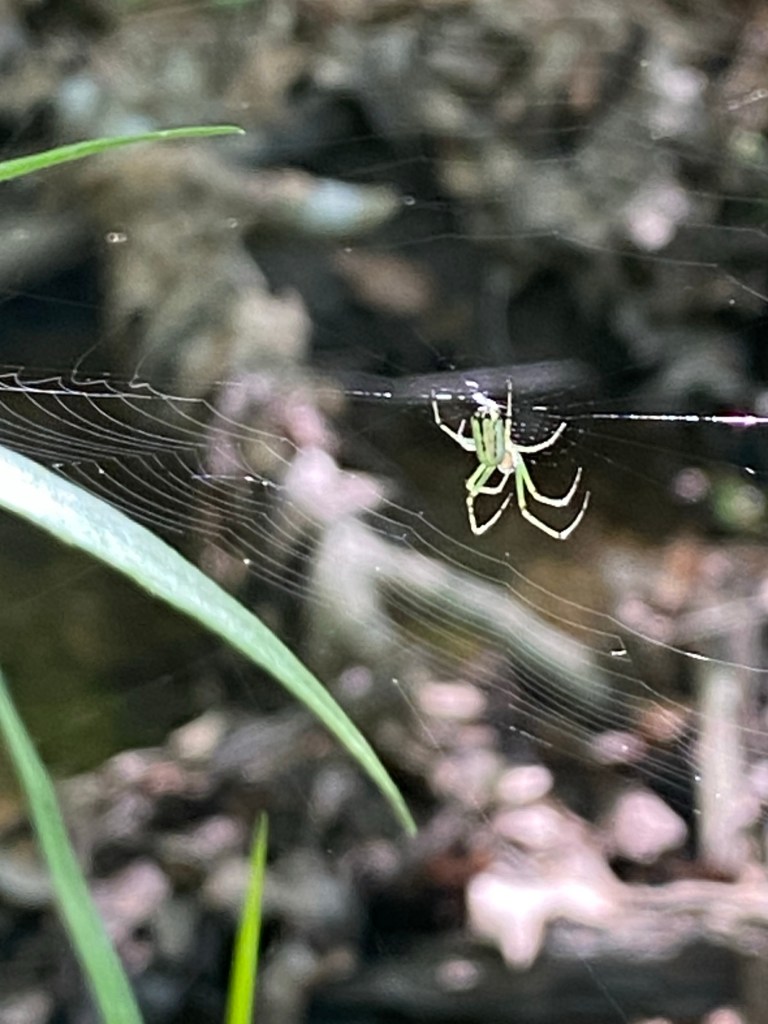
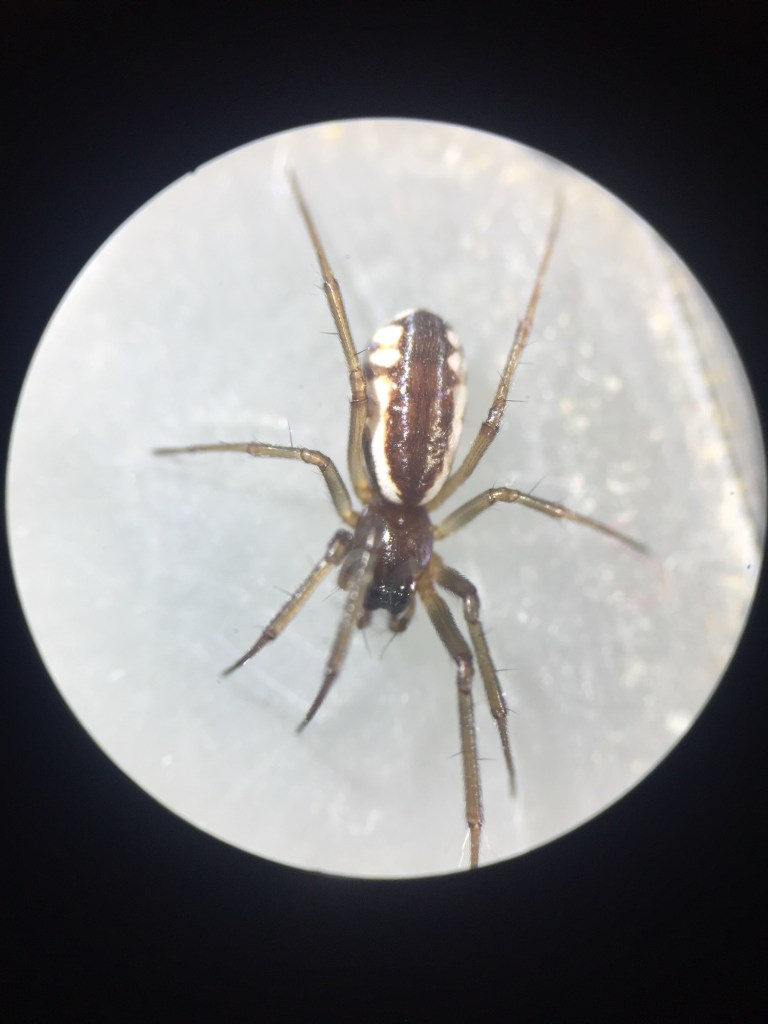
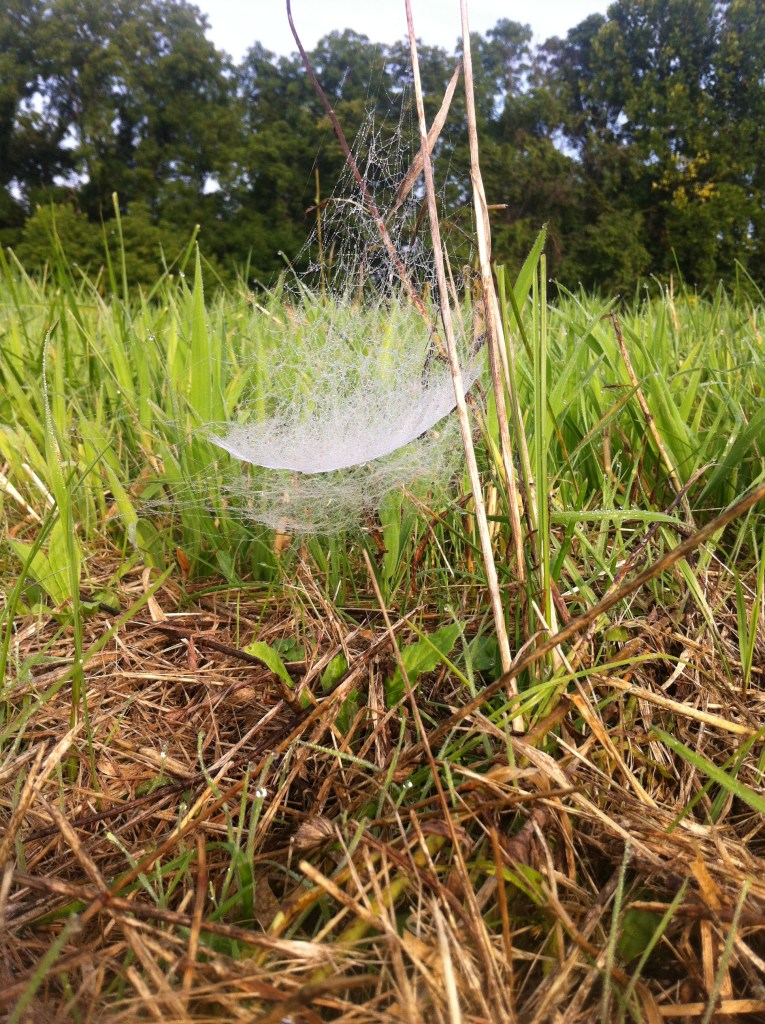
About a month into spring 2026, I’d been invited to lead a spider walk at the Frick Environmental Center for their “10 Years of Discovery” celebration. My small group barely got 500 yards because there were abundant spiders. We found thin-legged wolf spiders in the Pardosa genus sprinting around in the leaf litter. Young orchard orbweavers from the Leucuage genus with orange blazes on their abdomens are quite common, their webs stretched across sunny openings in horizontally slanted orbs. Sheet webs of spiders in the Linyphiidae family hung like silken bowls among last year’s dried flower stalks with their residents upside-down beneath them. Jumping spiders appeared prowling along the railings of the trail’s observation deck. There were lots of spiders in a short distance!
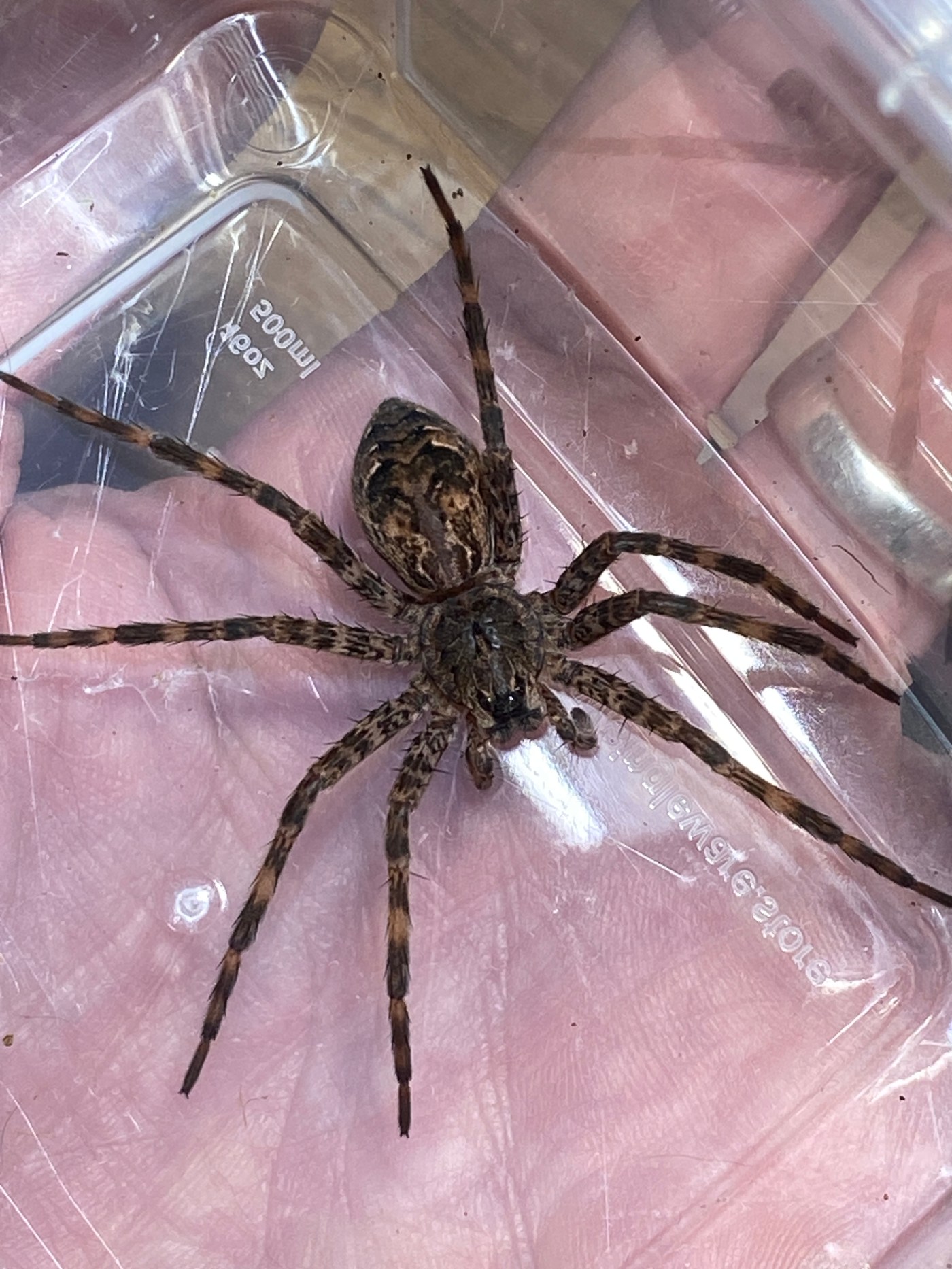
One of the Frick Environmental Center’s educators alerted me of “a huge spider” in the shed where she had been gathering supplies. The shed was small, dark, and dry. On one of the walls, facing downwards, was a large female fishing spider in the Dolomedes genus (aka Dark Fishing spiders). These spiders can get really big rivaling Carolina wolf spiders in leg span. She could’ve filled out the palm of my hand, but was not interested in being caught. She bolted back and forth as I tried to coax her into a container. You could actually hear her footfalls as she galloped across the wooden walls. I was finally able to trick her into going into the container and quickly secured a lid without pinching her long legs. For a spider to be that big in early spring meant that this lady had overwintered. Dolomedes spiders that were born last summer will hide beneath leaf litter or bark until spring and then molt to maturity. Judging by her size, she was either a fantastic hunter putting her on the bigger end of the Dolomedes size scale or she was an old lady, possibly born in spring of 2024. She was absolutely stunning with brown and tan chevron markings, banded legs, and just her mere size was beautiful all on its own. I showed her to my spider crew and she received many oohs and ahhs! I was about to let her go, but thought it’d be cool to hang onto her for a program I had the following weekend at the Outdoor Discovery Center at Crooked Creek. Finding a spider this big and beautiful was a total bonus!
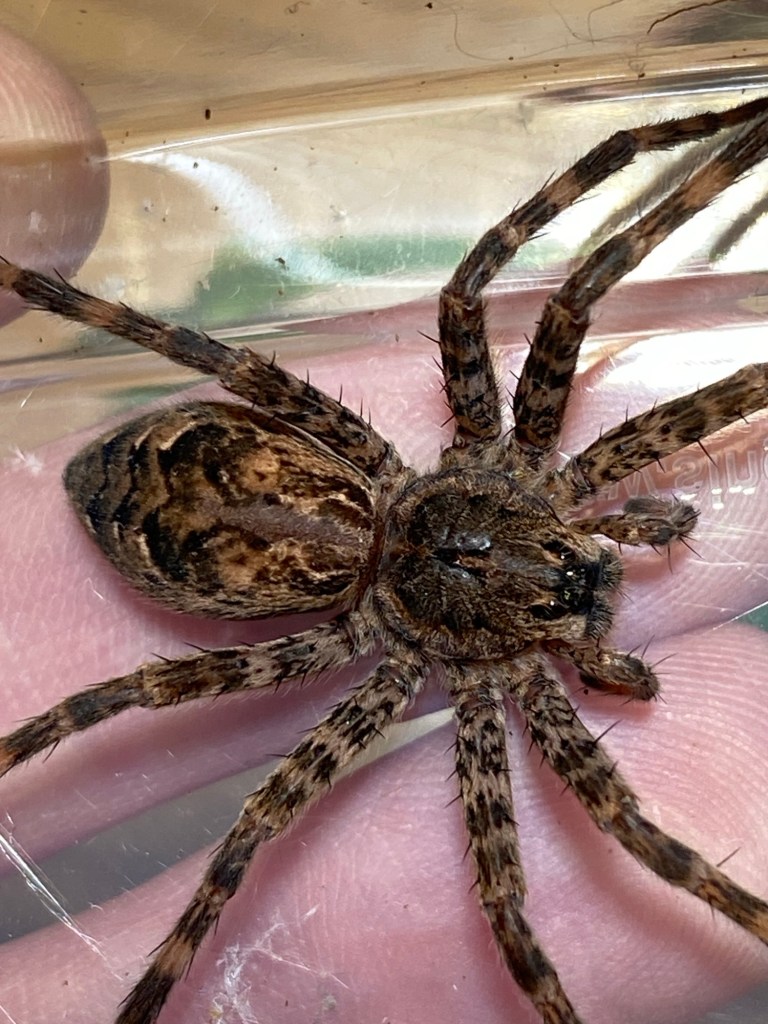
Dark Fishing Spider
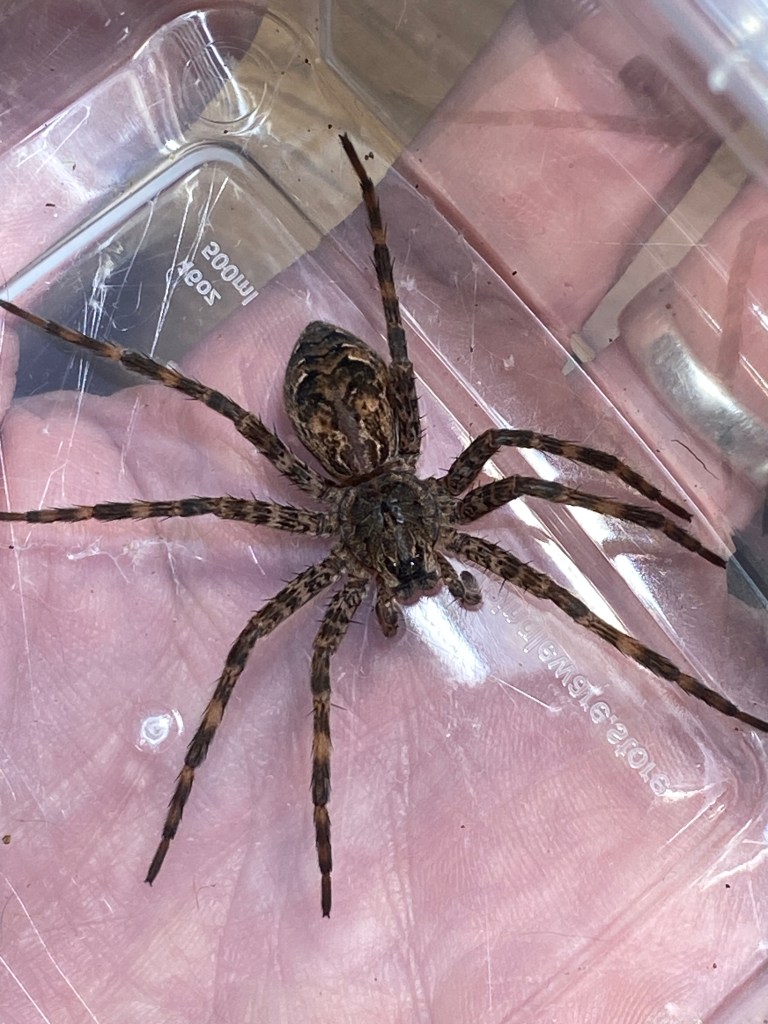
At home, I housed the Fishing spider into a large Utz pretzel container with some damp substrate and vertically leaning chunks of bark. She’d be all good to go for a week in captivity with a good meal or two of plump crickets. Then, I planned to release her back into the park where I found her satiated and unharmed. With the spider secured in her new digs on a shelf in my home office/lab, I went out for the rest of the day and straight to bed when I got home.
The next morning, I walked out into the hallway and noticed a large amount of dirt on the floor. I have cats, so sometimes, there’s a plant knocked over, etc, but the hallway doesn’t have any potted plants around. Then I saw the Utz container on the floor, lying sideways, lid OFF. I sleepily realized the dirt I thought was potting soil was actually substrate that had been flung out of the spider enclosure that ONE OF THE CATS (and I totally know which one) must’ve soccer-balled off of the shelf, onto the floor, out of the office, down the hall, and around the bend to where it sat now. I retraced the dirt trail. My immediate thought was, “NOOOOO, the freaking cat ATE Bonus Spider!” I should’ve put something heavy on top of the enclosure. I did not expect that the cat would even notice the spider in there. The spider must’ve been crawling around which triggered the cat.
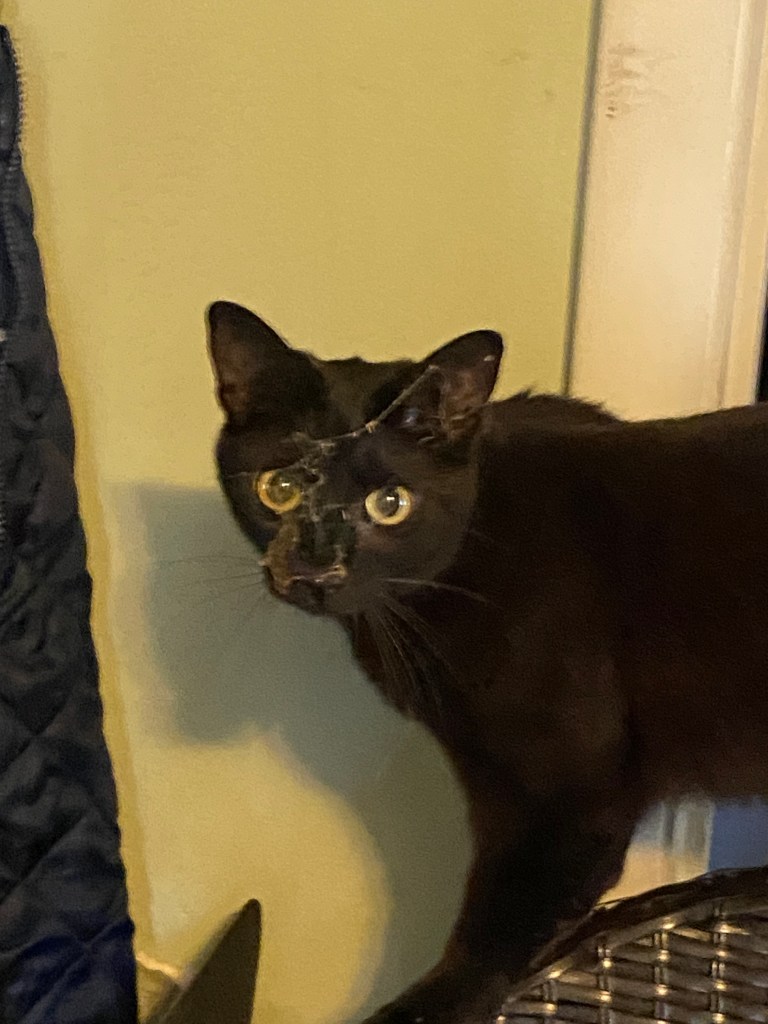
What an AWFUL death! I immediately started processing the scene. This could’ve happened overnight or hours and hours ago the afternoon prior. I didn’t find any spider legs in the immediate vicinity which led me to believe that the spider may have gotten away. Spiders can detach their legs when there is no escape, like if a cat were trying to eat her, so there wasn’t a sign of struggle. I gingerly started to inspect the inside of the tossed enclosure. Maybe she was still in there, underneath the debris? No spider.
Hmmm. The spider could very well be loose in the house. If she got out, and wasn’t eaten, where would she most likely go? Under something. I looked. There was some mail on the floor, a few rolled up envelopes, and a delivery box waiting to be recycled. None of them had a spider under, on, or in them. However, when I was inspecting the rolled up envelopes, I felt sticky dragline silk, the silk they leave behind as a back up attachment to the surface if they slip. She had definitely gotten out. She could be anywhere. Or maybe the cat did eat her and all of her legs, too.
For an entire week, I shook out my jackets and hoodies that were hanging on the hall coat rack and checked my shoes before I shoved my foot in them in case she was still alive and hiding there. When my friend came over, I had to tell him to do the same thing. It was one of those fail moments, (Sigh)…”You should know, there might be a really big spider loose in the house. Don’t be alarmed. She’s harmless.”
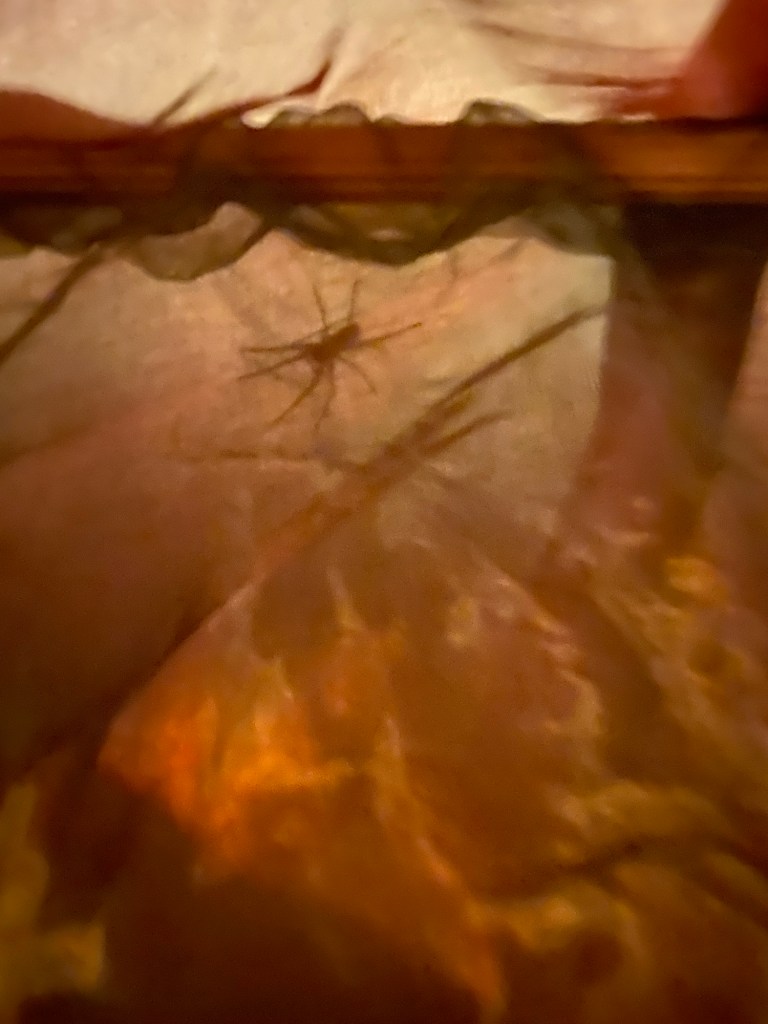
As the week came to a close, I resigned to thinking she really had been eaten by my demon cat. The Outdoor Discovery Center date was coming up, so I did some spider hunting and caught another dark fishing spider, not nearly as large as the spider that may or may not be loose in my house. Then, on a gloriously warm evening (it had been cold in Pittsburgh), I went to open my living room window to air out the house. As I brushed the curtains aside, my fingers hit sticky silk. I paused and felt my hands. She’s HERE! Fishing spiders don’t spin webs, they’re wanderers. I was feeling her dragline silk marking her path. I slowly started straightening out the folds in the fabric and then I SAW HER! Up high, near the curtain rod was the silhouette of that huge characteristic leg splay, all EIGHT of em! No legs were lost in battle! I was elated! She was okay! Now the part of trying to recapture her which was, again, a challenge. She is QUICK! The darting motion of these spiders can be unnerving, but it’s supposed to be as these spiders are not at the top of the food chain by any means! Even on fabric, her footfalls were audible. They sounded floppy and sudden, which could be another effective predator deterrent. For this spider to have outrun my highly movement-stimulated, one year old cat, she had to be scary (taking advantage of any second of cat hesitation) and quick. It also helped that these spiders can cling to horizontal surfaces to get out of reach. Not all spiders can do that.
I put Bonus spider in the same Utz container that now housed the other, smaller fishing spider. I tossed in a few crickets, too. I figured, there was plenty of space and available food that the spiders wouldn’t eat each other. The next day, when I checked on everyone, I saw a molt, from the younger, smaller spider, one cricket, and Bonus spider. Then I saw some spider legs at the bottom of the cage. Aw man. I slumped my shoulders and let out a “I should’ve known” sigh at the ceiling. Bonus spider ate the little guy when it was molting and incapable of running away. I felt really badly. I know this happens in nature and spiders will eat each other if there’s an opportunity, but this could’ve been prevented if I had kept them separate. I guess predator instinct is predator instinct – that spider was hungry.
Bonus spider made her appearance at the Outdoor Discovery Center and brightened many faces. Some recognized her kind saying they’ve seen fishing spiders in their houses and woodpiles. Many thought she was a wolf spider because of her size. Folks were pleased to hear these spiders are totally harmless and were curious to learn more about them. Mission accomplished! The very next day, as promised, I released her back into the woods next to a creek on a sprawling elm tree with loose bark where she could hide. I hope she lives all the way through to autumn and has many, many babies that carry her beauty and strong survival skills.
As for me, I will most likely continue to make mistakes and fails because I’m curious and spontaneous…and maybe a tad impulsive at times. I could add an encouraging “mistakes are how we learn” quote here, more so to make myself feel better, but what it comes down to is sticking with it and accepting the less glamorous parts. The mission was accomplished, so it’s all good (except for the smaller fishing spider), and besides, unexpected detours always make a story much more interesting!


An excellent story! Thank you for writing it! I have enjoyed it very much.
LikeLiked by 1 person
Really struggling to characterize any of your actions as a mistake, but I do try to avoid having two spiders in the same container. Fantastic story, thanks for posting.
LikeLike
I know, I know, haha! I knew it was a gamble and did it anyway. That’s the tad of “impulsive” I admit to. Thank you, Dr. Bradley!
LikeLike
Great story chronicle.from the land of spiders!
LikeLiked by 1 person
Yahoo Mail: Search, Organize, Conquer
LikeLike
Re the photos – spined micrathena
Yahoo Mail: Search, Organize, Conquer
LikeLike
Fuck! Sorry, new phone. Found a cool spider, the usual way by walking through her web in my yard 😬 I think it’s M. gracilis because of the stripes?Still enjoying your essays. Hope all is well!!Frances
Yahoo Mail: Search, Organize, Conquer
LikeLike